
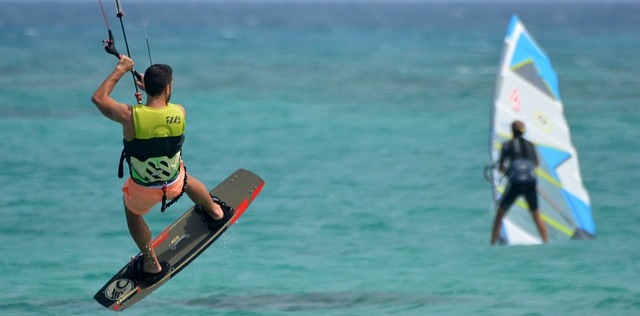
Imagine standing beside a turquoise lagoon, watching colorful kites move across a cloudless Egyptian sky. A gentle breeze becomes a steady wind, riders glide effortlessly over the water, and the desert mountains create a dramatic backdrop. This is the atmosphere that makes kitesurfing in El Gouna one of the Red Sea's most memorable outdoor experiences.
Located on Egypt's eastern coastline, approximately 25 kilometers north of Hurghada, El Gouna has developed an international reputation for water sports. Its combination of shallow lagoons, sandy beaches, professional kiteboarding centers and favorable wind conditions attracts beginners, recreational riders and experienced athletes.
But planning a successful kitesurfing holiday involves much more than choosing a sunny destination. Wind direction, tides, water depth, equipment, instructor qualifications and personal ability can all influence your experience.
This comprehensive guide explains everything you should know before kitesurfing in El Gouna, whether you are preparing for your first lesson, returning to the sport after a break or looking for somewhere to improve your riding skills.
1. What Is Kitesurfing and How Does It Work?
Kitesurfing, also known as kiteboarding, is a wind-powered water sport that combines elements of surfing, wakeboarding, sailing and board sports.
A rider stands on a specially designed board while controlling a large inflatable or foil kite through a system of lines connected to a control bar and harness.
Unlike conventional surfing, where waves provide propulsion, kitesurfing uses the aerodynamic force generated by the kite.
By positioning the kite at different angles to the wind, riders generate power, accelerate across the water, turn, slow down and eventually perform jumps or other maneuvers.
The main components of a kitesurfing system include:
-
Kite: Captures wind energy to generate controlled pulling force.
-
Control bar: Allows the rider to steer and adjust kite power.
-
Flying lines: Connect the control bar to the kite.
-
Harness: Transfers much of the kite's pull to the rider's body.
-
Kiteboard: Provides a surface for moving across the water.
-
Safety release system: Allows the rider to rapidly reduce kite power in an emergency.
-
Safety leash: Connects the rider to the kite's designated safety system.
Modern kitesurfing equipment has improved significantly over the years, but the sport still requires proper training and careful judgment.
Learning how to control kite power is far more important than simply standing on a board.
The first stages of instruction therefore focus on wind awareness, safety systems and kite handling before students attempt to ride independently.
2. Why Is El Gouna Famous for Kitesurfing?
El Gouna's appeal is not based on one characteristic. It is the combination of geography, climate and established water sports facilities that makes the destination attractive.
Shallow Lagoons That Support Learning
One of the biggest advantages of El Gouna is the presence of extensive shallow-water areas.
At suitable tide levels, several designated training zones allow beginners to practice kite handling, body dragging and their first water starts without immediately entering deep open water.
Shallow conditions can make certain exercises easier because students may be able to stand while resetting their equipment.
However, shallow water should never be confused with completely safe water. Very shallow sections may contain hard surfaces, exposed reef, shells or uneven ground.
Students must always follow their instructor's guidance about appropriate training depths.
Favorable Wind Conditions
El Gouna benefits from the northerly and northwesterly wind patterns associated with the Egyptian Red Sea coastline.
During many spring, summer and autumn periods, wind conditions can be favorable for kiteboarding.
The area's relatively open coastal geography allows riders to experience sustained wind during suitable weather conditions.
Nevertheless, wind varies daily and seasonally. No destination can guarantee suitable riding conditions every day.
Warm Climate and Outdoor Lifestyle
Egypt's Red Sea coast is known for abundant sunshine and generally mild winters.
Many visitors appreciate being able to spend extended periods outdoors without the cold-water conditions common at some European kiteboarding destinations.
During summer, however, strong sunshine and high temperatures make hydration and sun protection especially important.
Established Kiteboarding Infrastructure
El Gouna has a concentration of dedicated kite centers offering various combinations of:
-
Beginner courses.
-
Intermediate coaching.
-
Private instruction.
-
Equipment rental.
-
Kite storage.
-
Beach assistance.
-
Rescue arrangements.
-
Equipment maintenance.
-
Changing facilities and beach amenities.
Services differ between centers, so visitors should confirm exactly what is included before booking.
A Destination for Non-Kitesurfers Too
El Gouna also offers restaurants, marinas, beaches, boat excursions and other water-based activities.
This makes it attractive for families, couples and groups in which only some members want to learn kitesurfing.
A kiteboarding holiday can therefore be combined with a broader Red Sea vacation.
3. Where Is El Gouna and How Do You Get There?
El Gouna is situated north of Hurghada on Egypt's Red Sea coast.
The closest major international airport is Hurghada International Airport, commonly identified by the airport code HRG.
Travelers arriving through Hurghada can continue to El Gouna by private transfer, taxi or a prearranged hotel transportation service.
Road journeys commonly take approximately 30–45 minutes, depending on traffic, the departure point and the location of your accommodation.
El Gouna is organized around different neighborhoods, beaches and lagoon areas.
Popular accommodation districts include Downtown, Abu Tig Marina and several residential and beachfront developments.
When planning a kitesurfing holiday, selecting accommodation near your preferred kite center can reduce daily travel time.
However, staying near a marina or Downtown may be more convenient if your group also wants restaurants, nightlife and shopping within easy reach.
Before choosing a hotel, check how you will reach the kite center each day and whether your lesson package includes transportation.
4. Best Time of Year for Kitesurfing in El Gouna
Understanding the wind season is one of the most important parts of planning your trip.
Kitesurfing is possible during different periods of the year, but wind strength, consistency, temperature and water conditions change with the seasons.
Spring: March to May
Spring is a popular period for water sports along the Red Sea.
Temperatures generally become warmer, daylight increases and wind conditions can provide frequent opportunities for riding.
Many visitors appreciate spring because the weather may feel more comfortable than the intense heat of midsummer.
March can bring variable conditions, while April and May often offer attractive opportunities for beginners and intermediate riders.
Nevertheless, exact wind conditions depend on individual weather systems.
Summer: June to August
Summer is frequently regarded as one of El Gouna's stronger kitesurfing periods.
Warm weather, long daylight hours and favorable wind patterns create opportunities for extended riding sessions.
Experienced riders may enjoy the potential for more powered-up conditions.
Beginners can also learn during summer, but strong wind is not automatically better for students.
Training must take place within an appropriate wind range determined by a qualified instructor.
The main summer challenges are heat exposure, sunburn, dehydration and potentially crowded kite zones.
Autumn: September to November
Early autumn is attractive for visitors seeking a balance between warm water and favorable wind conditions.
September and October can offer enjoyable sessions for riders of different abilities.
As autumn progresses, conditions may become more variable, making flexible scheduling valuable.
Travelers should avoid assuming that a particular month guarantees uninterrupted kitesurfing.
Winter: December to February
Winter in El Gouna is considerably milder than winter in many northern European destinations.
Kitesurfing may still be possible, but wind can be less consistent and air and water temperatures are cooler.
Some riders may require different kite sizes or additional thermal protection.
Beginners should book lessons with enough scheduling flexibility to accommodate unsuitable days.
Seasonal Overview
| Season | General Conditions | Planning Advice |
|---|---|---|
| March–May | Warming weather and increasing opportunities | Good for flexible learning holidays |
| June–August | Often strong riding conditions and high temperatures | Prioritize hydration and suitable wind limits |
| September–October | Warm water and attractive wind opportunities | Popular for lessons and freeriding |
| November–February | Cooler and more variable conditions | Allow extra days for weather changes |
These are seasonal tendencies, not daily forecasts.
The best month also depends on your riding style, equipment, skill level and preference for air temperature.
5. Understanding Wind Direction, Speed and Forecasts
Kitesurfing depends on the relationship between wind, the kite and the riding area.
Understanding this relationship is essential for safety.
Wind Direction
Wind direction describes where the wind comes from.
For example, a northwesterly wind blows from the northwest toward the southeast.
At a kite beach, wind may be described as:
Onshore wind: Blows from the water toward the beach.
Offshore wind: Blows from the beach toward open water.
Cross-shore wind: Blows approximately parallel to the coastline.
Cross-onshore wind: Blows diagonally toward the beach.
Cross-offshore wind: Blows diagonally away from the beach.
Offshore and cross-offshore conditions can carry riders away from shore and require particular caution.
Never assume a wind direction is safe because other people are riding.
Your instructor or kite center must assess the actual launch area, including obstacles, water depth, rescue coverage and forecast changes.
Wind Speed in Knots
Kitesurfers commonly measure wind speed in knots.
One knot equals one nautical mile per hour.
Wind strength influences kite size, water conditions and the amount of power generated.
A wind speed that is suitable for an experienced rider using a particular kite may be unsuitable for a beginner using different equipment.
There is no universal safe wind speed for every person.
Gusts and Wind Variability
An average wind speed does not tell the whole story.
Wind gusts can temporarily increase kite power, while lulls may cause the kite to lose stable flight.
A forecast showing substantial gust differences deserves additional caution.
Wind direction changes can also alter the safety of a riding area.
Choosing a Wind Forecast
Commonly used forecasting services include Windguru, Windfinder and other reputable marine weather providers.
Check several factors rather than focusing only on the headline wind speed:
-
Average wind speed.
-
Maximum gusts.
-
Wind direction.
-
Forecast uncertainty.
-
Temperature.
-
Weather changes.
-
Tide conditions.
-
Local observations from the kite center.
A beach-based instructor with access to current conditions may make a more useful session decision than someone relying on an app alone.
6. Best Kitesurfing Spots in El Gouna
El Gouna has several established kiteboarding areas with different facilities and water characteristics.
The best location depends on your experience, the day's wind direction, the tide and the operating rules of the kite center.
Mangroovy Beach
Mangroovy Beach is among El Gouna's most recognized kitesurfing areas.
Situated toward the northern part of the resort, it is associated with numerous kite schools and dedicated water sports facilities.
The surrounding lagoon provides shallow-water training opportunities when the tide and local conditions are suitable.
Mangroovy attracts riders who want lessons, equipment services and access to a lively kiteboarding community.
Its popularity also means launch areas and certain water sections can become crowded.
Beginners should use designated training zones and avoid crossing experienced riders' routes without guidance.
Buzzha Beach
Buzzha Beach is another established kiteboarding location associated with broad shallow-water areas.
The surrounding lagoon may provide favorable flat-water conditions for learning and progression.
However, water depth can change significantly with the tide.
A section that is suitable for teaching at one time may become too shallow later.
Always ask the operating kite center which areas are available on the day of your visit.
Northern Lagoon Riding Areas
Several kite centers operate along El Gouna's northern lagoon coastline.
These areas are valued for access to flat or lightly choppy water, depending on the location and prevailing conditions.
Different operators may designate separate zones for beginners, independent riders and specialized disciplines.
A rider familiar with one kite center should not assume that another uses identical beach procedures.
Club Paradisio and the Southern Lagoon Area
The Club Paradisio area is associated with additional kiteboarding and water sports facilities.
Depending on the center and conditions, activities may take place in different shallow or deeper-water zones.
A particular location may be suitable for certain ability levels but less appropriate for others.
Always verify access requirements, lesson arrangements and available rescue support.
Choosing the Right Kite Spot
Before selecting a location, ask:
-
Is the spot suitable for my current ability?
-
How does the tide affect water depth?
-
Are lessons available in my preferred language?
-
Is equipment rental provided?
-
Is rescue assistance available?
-
Are there designated launch and landing areas?
-
Does the center require an independent-riding assessment?
-
What facilities and fees are included?
A professional training environment is generally more valuable than choosing a beach based only on attractive photographs.
7. Is El Gouna Suitable for Beginners?
Yes. El Gouna is widely known as a beginner-friendly kitesurfing destination, particularly because of its shallow lagoons and established instruction facilities.
However, beginner-friendly does not mean risk-free.
Learning to control a kite involves managing a powerful aerodynamic system.
Even a small beginner kite can generate significant pulling force in unsuitable conditions.
Why Flat Water Helps
Flat water usually makes initial board control easier because students do not have to manage large waves at the same time.
A relatively stable water surface helps beginners concentrate on:
-
Kite positioning.
-
Body balance.
-
Board orientation.
-
Water starts.
-
Controlled stopping.
-
Riding short distances.
Why Shallow Water Helps
Appropriate shallow-water training areas may allow students to regain their footing during selected exercises.
This can reduce fatigue during early lessons.
Nevertheless, falling or being pulled in very shallow water can cause injuries.
Students should not attempt jumps or high-speed maneuvers in shallow areas.
Do You Need Previous Experience?
No previous kiteboarding experience is normally required for a beginner course.
An ability to swim confidently, follow instructions and remain comfortable in water is important.
Schools may also have minimum age, weight, health and fitness requirements.
These should be confirmed before booking.
Is Kitesurfing Physically Difficult?
The sport requires coordination, balance, concentration and endurance.
Contrary to what many beginners assume, experienced riders do not hold the kite's entire pulling force with their arms.
The harness transfers much of the load through the body.
Technique matters more than upper-body strength alone.
However, students must still be physically capable of controlling equipment and responding to unexpected situations.
8. What Happens During Your First Kitesurfing Lesson?
A properly structured beginner course develops skills progressively.
Students should not expect to stand on a board immediately.
Stage One: Safety Briefing
The instructor introduces the equipment and explains fundamental safety procedures.
Topics normally include wind direction, hazardous areas, communication, equipment inspection and emergency release systems.
You should understand what to do if conditions change or you lose control.
Stage Two: Understanding the Wind Window
The wind window is the area in which a kite can fly relative to the rider and the wind direction.
Different positions within this window generate different amounts of power.
Students learn why a kite produces relatively little pull in some positions and significantly more force in others.
This knowledge forms the foundation of controlled riding.
Stage Three: Kite Handling
Beginners practice steering, positioning and stabilizing the kite.
The instructor may use specially selected equipment and communication systems.
Students develop awareness of how small steering movements influence kite movement.
Stage Four: Body Dragging
Body dragging involves moving through the water using kite power without standing on a board.
It helps students develop controlled movement, direction management and confidence in the water.
Later exercises may introduce body dragging upwind, which is useful when retrieving a lost board.
Stage Five: Water Starts
After demonstrating sufficient control, students begin learning how to place their feet on the board and use kite power to rise out of the water.
Water starts require coordinating several actions at once:
-
Keeping the board correctly positioned.
-
Maintaining body alignment.
-
Steering the kite smoothly.
-
Applying suitable power.
-
Avoiding excessive pulling force.
Unsuccessful attempts are normal.
Stage Six: Short Rides
Once students can water-start, they begin practicing short, controlled rides.
The initial goal is consistent balance rather than speed.
Stage Seven: Direction Changes and Upwind Riding
As skills develop, riders learn to maintain direction, manage speed, turn and eventually travel upwind.
Upwind riding is a particularly important milestone because it allows a rider to return toward the starting area without relying entirely on assistance.
How Long Does Learning Take?
Progress varies greatly between individuals.
Some students may experience their first water starts after several hours of supervised practice, while others require considerably longer.
Weather, lesson format, athletic experience, fatigue and confidence all influence progress.
Avoid schools promising that every student will become independent after a fixed number of hours.
A responsible instructor advances students according to demonstrated ability, not a predetermined marketing schedule.
9. Group Lessons, Semi-Private Lessons or Private Coaching?
Different lesson formats suit different needs.
Group Lessons
Group instruction may provide a more affordable introduction.
Students can learn from demonstrations and observe common mistakes.
However, practical time controlling the kite may be shared between participants.
Ask the school how many students share an instructor and a kite.
Semi-Private Lessons
Semi-private lessons typically involve a small number of learners working with one instructor.
They may provide a balance between cost and individual attention.
This format can work well for friends or couples with similar learning abilities.
Private Lessons
Private instruction gives one student dedicated access to an instructor.
This can be especially valuable for someone who wants focused coaching or has specific skills to improve.
Private lessons do not eliminate the need for suitable weather or sufficient practice.
Refresher Lessons
If you previously learned kitesurfing but have not practiced for some time, a refresher session may be advisable.
Equipment and safety systems evolve, and skills may become less reliable after a long break.
Advanced Coaching
Experienced riders may seek coaching in:
-
Consistent upwind riding.
-
Transitions.
-
Jump preparation.
-
Controlled landings.
-
Freestyle techniques.
-
Wave riding where conditions permit.
-
Foil progression.
Advanced maneuvers should be practiced only in appropriate areas with suitable supervision and equipment.
10. How to Choose a Reliable Kitesurfing School
Choosing a school is one of the most important decisions you will make.
A professional school should demonstrate a clear commitment to safety, progressive instruction and transparent communication.
Check Instructor Qualifications
Ask whether instructors hold qualifications from recognized kiteboarding training organizations, such as IKO or VDWS.
A qualification is useful evidence of training, but you should also consider how the school operates in practice.
Ask About Student-to-Instructor Ratios
A small ratio can improve individual supervision and communication.
For beginner courses, ask whether students share a kite and how practical instruction time is calculated.
Confirm Safety Equipment
The school should provide suitable equipment in safe working condition.
Ask about helmets, flotation or impact protection, harnesses, quick-release systems and communication procedures.
Ask About Rescue Support
Understand how the center responds if a rider cannot return to shore.
Rescue arrangements differ between locations and may depend on operating hours and permitted riding zones.
Review the Teaching Plan
A good school should explain its course structure.
You should know what skills will be taught and how progress will be assessed.
Understand the Booking Terms
Before paying, confirm:
-
Total instruction hours.
-
Private or shared lesson format.
-
Equipment included.
-
Beach or station fees.
-
Rescue coverage.
-
Cancellation rules.
-
Weather-related rescheduling.
-
Refund or credit conditions.
-
Certification or skills records.
A clear written explanation helps prevent misunderstandings.
11. Essential Kitesurfing Equipment Explained
Understanding the equipment helps you become a more confident student and make better decisions about renting or buying gear.
Inflatable Kites
Inflatable kites are widely used for recreational kiteboarding.
They contain inflatable structural sections that help maintain the kite's shape.
Depending on the model, inflatable kites can provide different combinations of stability, turning speed, relaunch ability and performance.
The appropriate kite depends on your ability and the conditions.
Foil Kites
Foil kites use fabric cells and aerodynamic structures to maintain their shape.
Certain foil designs are suited to specialized kiteboarding disciplines or lighter-wind riding.
They require an understanding of their handling characteristics and are not automatically the best choice for a beginner.
Twin-Tip Boards
Twin-tip boards are designed to travel in either direction without turning the board around.
They are widely used for learning, freeriding and various freestyle disciplines.
Board size, shape and flexibility influence how easily a rider begins moving and maintains control.
Directional Boards
Directional boards are typically designed to be ridden with a preferred forward direction.
They are associated with disciplines such as wave riding and some freeride styles.
Transitions and stance management differ from twin-tip riding.
Hydrofoil Boards
Hydrofoil equipment uses an underwater wing to lift the board above the water at sufficient speed.
Foiling can create a smooth sensation of movement but introduces additional hazards.
Hydrofoil components are rigid, and adequate water depth is essential.
Beginners should not use foil equipment without appropriate training.
Control Bars and Lines
The control bar allows the rider to steer and manage kite power.
Lines must be checked for wear, tangles and correct connection.
Do not launch a kite if there is uncertainty about its rigging or safety system.
Harnesses
Harnesses transfer much of the kite's force to the rider's body.
Waist and seat harnesses have different characteristics.
The correct harness should fit securely without creating excessive pressure or restricting necessary movement.
Protective Equipment
Depending on the lesson or riding style, protective equipment may include:
-
An appropriate water sports helmet.
-
A suitable impact or flotation vest.
-
Sun-protective clothing.
-
Foot protection where recommended.
-
A wetsuit suitable for the conditions.
Protective equipment should be selected according to professional guidance.
12. Should You Rent or Buy Kitesurfing Equipment?
Most first-time visitors should begin by renting equipment through their school rather than purchasing a complete kiteboarding setup.
Advantages of Renting
Renting allows beginners to use equipment selected for their ability and the conditions.
It also avoids transporting large bags, paying airline sports-equipment charges and making expensive purchasing decisions before understanding personal preferences.
Advantages of Owning Equipment
Owning equipment can become attractive for people who ride frequently.
Experienced kiters may prefer familiar equipment that suits their riding style.
However, ownership also involves maintenance, inspection, storage and transportation.
Before Renting Equipment Independently
Ask the kite center whether it requires proof of ability.
Some centers may assess your riding skills before allowing independent rental.
You may need to demonstrate controlled riding, safe equipment handling and the ability to travel upwind.
Should Beginners Buy a Kite Immediately?
Usually, it is better to complete initial training first.
A kite suitable for one rider or location may not be appropriate elsewhere.
Your instructor can help explain how rider weight, board dimensions, kite design and wind conditions influence equipment selection.
13. Kitesurfing Safety: What Every Rider Must Know
Kitesurfing offers an exciting sense of freedom, but safety must come before performance.
The most serious risks often arise when wind power, poor judgment, unsuitable locations and inadequate preparation combine.
Never Learn Without Qualified Instruction
Watching online tutorials is not a substitute for supervised lessons.
A professional instructor can identify errors before they develop into dangerous situations.
Understand Your Safety Release System
You must know how your equipment's release mechanism operates.
Practice the procedure under instruction, including what to do after activating it.
Never assume that all kite systems operate identically.
Inspect Equipment Before Launching
Check the kite, lines, bar, harness connections and safety components.
Damaged equipment should not be used until assessed and repaired appropriately.
Maintain Distance from Obstacles
Avoid launching or flying near buildings, roads, vehicles, electrical infrastructure, trees and uninvolved beach visitors.
A kite can produce substantial pulling force unexpectedly.
Respect Other Water Users
Be aware of swimmers, boats, windsurfers, wingfoilers and other kitesurfers.
Observe the local right-of-way rules and designated zones explained by the kite center.
Do Not Ride Beyond Your Ability
A beginner should not copy advanced tricks or venture into unfamiliar areas simply because more experienced riders are present.
Progress should be gradual.
Watch Changing Weather
A session that begins in manageable conditions can become unsuitable.
Return to a safe area early if wind strength, direction, visibility or other conditions deteriorate.
Learn Self-Rescue Procedures
Self-rescue skills help riders manage situations where normal riding is no longer possible.
These techniques must be taught and practiced appropriately with an instructor.
Stay Hydrated and Protect Your Skin
El Gouna's sunshine can be intense, especially during summer.
Use suitable sun protection, drink water regularly and take breaks when needed.
Fatigue affects reaction times and decision-making.
Never Treat Shallow Water as a Landing Cushion
Shallow lagoons can make learning convenient, but they can also make falls dangerous.
Do not attempt jumps in shallow water.
14. How Do Tides Affect Kitesurfing in El Gouna?
Tides can have a major influence on the usability of shallow lagoons.
At higher water levels, particular sections may provide sufficient depth for beginner exercises or recreational riding.
At lower levels, exposed areas may limit access or create hazards.
Water depth can also vary across the same lagoon.
A suitable section near the main training area does not mean the entire lagoon is equally safe.
Why Tide Planning Matters
The tide may affect:
-
Where lessons take place.
-
Which launch corridors are available.
-
Whether a lagoon has sufficient riding depth.
-
The suitability of hydrofoil equipment.
-
Access to particular parts of the water.
-
The timing of certain training exercises.
What Should Visitors Do?
Ask the kite center for the day's recommended riding area and lesson schedule.
Do not assume a beach will have identical conditions throughout the day.
If you are an independent rider, obtain a local briefing before your first session.
15. Is Kitesurfing Suitable for Children and Families?
Kitesurfing can appeal to active families, but younger participants require special consideration.
Age alone does not determine readiness.
A child must be able to understand instructions, communicate clearly and manage the physical and psychological demands of training.
Body weight, swimming ability, equipment suitability and the school's policies also matter.
Some kite schools provide programs for younger learners, but minimum requirements vary.
Parents should never attempt to teach children with adult equipment without qualified supervision.
Families Traveling Together
A family holiday in El Gouna can combine kiteboarding lessons with beach time and other activities.
Parents can arrange lessons at different times if childcare is required.
Non-participating family members may enjoy suitable beach facilities while riders train, subject to the location's access policies.
16. Common Beginner Mistakes and How to Avoid Them
Learning kitesurfing requires patience.
Understanding common errors can make your training more productive.
Trying to Ride Too Early
Some beginners focus entirely on standing on the board.
However, insufficient kite control can make water starts frustrating or unsafe.
Improve your kite-handling skills before rushing ahead.
Pulling Too Hard on the Bar
Beginners sometimes assume that pulling the bar always provides better control.
Excessive input can generate unwanted power or contribute to unstable kite behavior, depending on the equipment.
Follow your instructor's explanation of proper bar control.
Looking at the Board Instead of the Riding Direction
Body posture and visual focus influence balance.
During early riding, looking downward excessively may interfere with stable positioning.
Ignoring Wind Changes
A kite size or exercise suitable earlier in the session may become inappropriate if conditions change.
Choosing Equipment Based on Appearance
A larger kite is not necessarily better, and a smaller board is not always more advanced.
Equipment should match the rider and conditions.
Learning While Exhausted
Fatigue affects coordination.
Short, focused sessions with breaks may be more productive than continuing after concentration declines.
Comparing Progress with Other Students
Every student learns differently.
Your objective is safe, repeatable progress rather than competing with someone who has different experience.
17. How to Improve After Your First Successful Ride
Standing on the board for the first time is exciting, but independent kitesurfing requires additional skills.
Improve Speed Control
Practice maintaining a comfortable speed without unnecessary kite movement.
Smooth control usually matters more than aggressive steering.
Develop Consistent Body Position
Correct posture helps transfer power efficiently and maintain board stability.
Your instructor may focus on leg position, hip alignment and body rotation.
Practice Riding in Both Directions
Some beginners become comfortable riding one direction before the other.
Balanced practice helps develop overall control.
Learn to Maintain Your Position Upwind
Upwind riding is a major progression milestone.
It allows the rider to make controlled progress against the wind rather than continually drifting downwind.
Master Safe Transitions
Transitions allow riders to change direction without losing control.
Start with basic techniques before attempting more complicated maneuvers.
Learn to Evaluate Conditions Independently
Experienced riders must understand forecasts, obstacles, tides and equipment limitations.
Being able to ride is not the same as being ready to make every safety decision independently.
18. Advanced Kitesurfing Opportunities in El Gouna
El Gouna is not only for complete beginners.
Its lagoons can also provide opportunities for recreational freeriding and selected advanced disciplines.
Freeriding
Freeriding emphasizes enjoyable, controlled riding across the water.
Many riders appreciate relatively flat conditions for practicing longer runs and improving technique.
Freestyle
Freestyle focuses on tricks and technical maneuvers.
Suitable riding space, equipment and water depth are essential.
Not every lagoon area is appropriate for jumping.
Big Air
Big-air riding involves powerful jumps and controlled landings.
It demands advanced skills and careful assessment of the wind and available space.
It should never be practiced in crowded or shallow beginner zones.
Hydrofoil Kitesurfing
Hydrofoiling provides a different riding sensation as the board lifts above the surface.
It requires specialized instruction, adequate depth and consideration for other water users.
Downwinders
A downwinder involves traveling with the prevailing wind between planned locations.
Such trips require local knowledge, coordination and appropriate support.
Never attempt an unfamiliar downwind route alone.
19. How Much Does Kitesurfing in El Gouna Cost?
Kitesurfing expenses depend on the type of experience, duration, equipment and services included.
Instead of relying on a fixed price that may become outdated, compare quotations using the same criteria.
Beginner Course Costs
A beginner course may be charged by the hour or sold as a multi-session package.
Check whether the quoted price includes:
-
Instructor time.
-
Practical kite time.
-
Equipment.
-
Safety gear.
-
Beach access.
-
Insurance arrangements.
-
Rescue support.
-
Course materials.
-
Any applicable taxes.
Private Lesson Costs
Private lessons often cost more per hour because one instructor works directly with one student.
However, the amount of practical attention may also be greater.
Independent Equipment Rental
Rental pricing can depend on whether you need a complete setup or individual items.
Some centers offer daily or multi-day packages.
Station and Beach Fees
Independent riders may be required to pay a station or beach-use fee, particularly when accessing organized kiteboarding areas.
Ask whether this includes launch assistance, storage and rescue services.
Hidden Costs to Check
Potential additional expenses include transportation, equipment damage charges, storage, meals and weather-related scheduling changes.
Always request an itemized quotation.
Choosing Value Rather Than the Lowest Price
The cheapest course is not automatically the best value.
Instructor quality, safety, equipment condition and transparent booking terms should influence your decision.
20. Planning a Five-Day Beginner Kitesurfing Holiday
A multi-day stay allows greater flexibility than trying to learn everything during one afternoon.
The following plan is an illustration, not a promise that a particular skill will be achieved on a specific day.
Day One: Orientation and Safety
Arrive at the kite center, complete the briefing and become familiar with the equipment.
Focus on wind awareness and basic kite handling.
Day Two: Kite Control and Water Exercises
Continue supervised practice and develop greater confidence.
The instructor may introduce additional water-based exercises according to progress.
Day Three: Preparing for Water Starts
If your control and conditions are suitable, begin practicing board positioning and water-start techniques.
Some students will reach this stage earlier; others may need additional time.
Day Four: Developing Short Rides
Work on consistency, posture and controlled movement.
If conditions are unsuitable, use the day for rest or another activity.
Day Five: Consolidating Your Skills
Review previous exercises and identify the next steps in your training.
Ask your instructor for an honest assessment of your current level.
This approach leaves room for weather changes and individual learning differences.
21. What Should You Pack for a Kitesurfing Holiday?
A little preparation can make your stay more comfortable.
Useful items include:
-
High-protection sunscreen suitable for water sports.
-
UV-protective clothing.
-
Swimwear.
-
Sunglasses for use off the water.
-
A reusable water bottle.
-
A hat for breaks on the beach.
-
A towel.
-
Suitable footwear.
-
A light jacket for cooler evenings.
-
Any personal medication.
-
Copies of relevant travel and insurance information.
During cooler months, ask your school whether a wetsuit is recommended or included.
If you bring personal kite equipment, confirm airline baggage rules before departure.
Avoid leaving equipment or electronic devices exposed to intense heat for long periods.
22. Where Should Kitesurfers Stay in El Gouna?
The most convenient accommodation depends on your priorities.
Close to the Kite Beaches
Accommodation near your preferred kite center can reduce daily transportation time.
This may be especially convenient for visitors planning lessons every day.
Abu Tig Marina
The marina area appeals to travelers who enjoy restaurants, evening walks and a lively holiday atmosphere.
It can be a practical choice for mixed-interest groups.
Downtown El Gouna
Downtown offers access to restaurants, shops and local transportation connections.
It may suit travelers who want a central base rather than staying directly beside a kite school.
Hotel Facilities
Before booking, check:
-
Transportation to the kite center.
-
Equipment storage arrangements.
-
Breakfast schedules.
-
Access to beach facilities.
-
Family amenities.
-
Cancellation policies.
-
Whether non-kiting companions have enough activities nearby.
A hotel close to the beach is not necessarily within walking distance of your chosen kiteboarding station.
23. Other Water Sports and Activities in El Gouna


